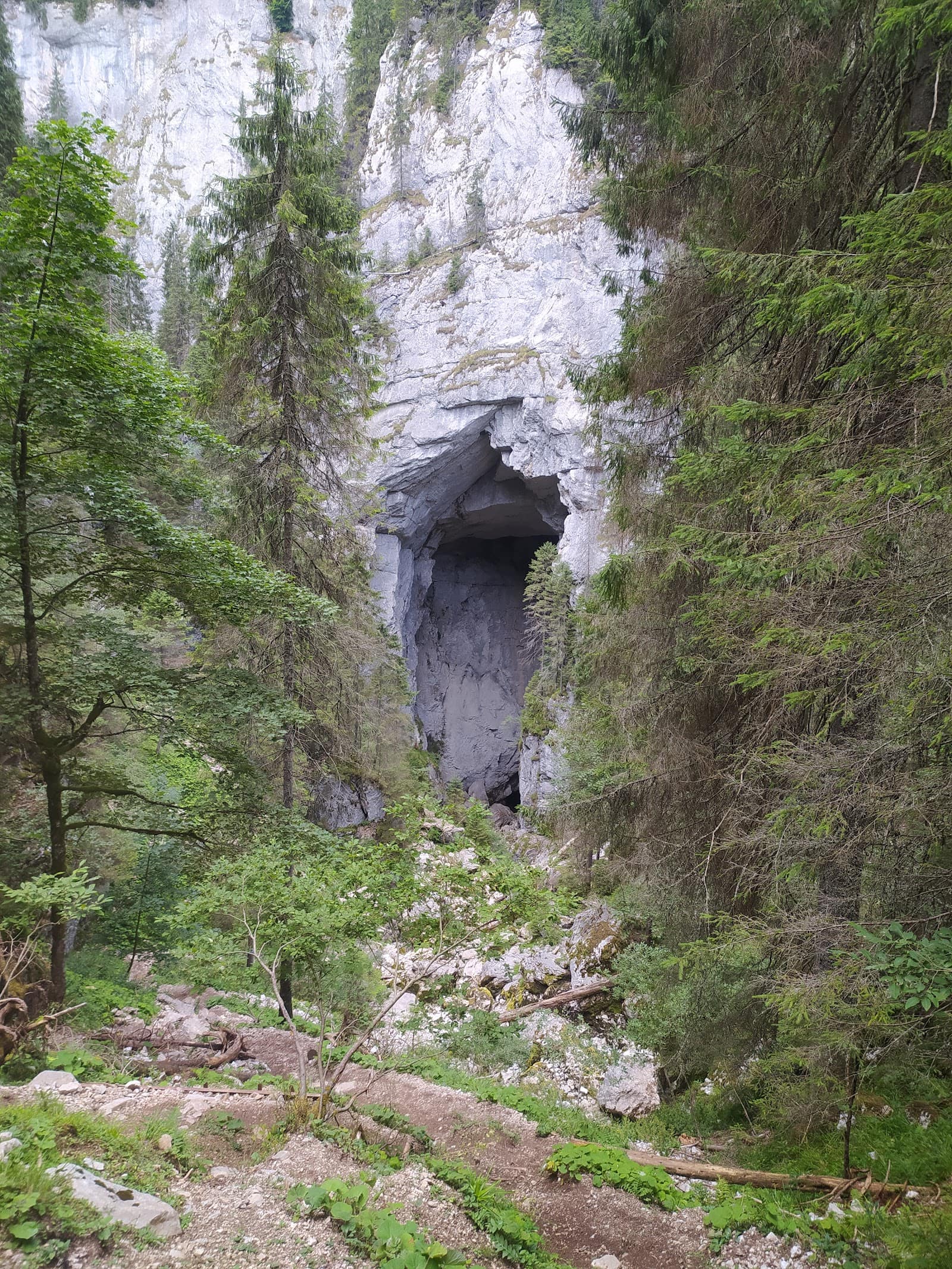
For most people, Bukovina means the painted monasteries, but to their south rises a massif that deserves just as much attention: Rarău-Giumalău. Here you will find one of the most recognisable rocky landscapes in the Eastern Carpathians, a scenic road that climbs almost to the ridge, and a rare combination of wild nature and religious heritage within an hour's drive of each other.
This guide links the mountain sights of Rarău with the cultural landmarks around it, so you can build a trip that doesn't force you to choose between peaks and monasteries. For an overview of the region, see the Bukovina-Rarău zone page.
The Rarău-Giumalău massif: two peaks, two characters
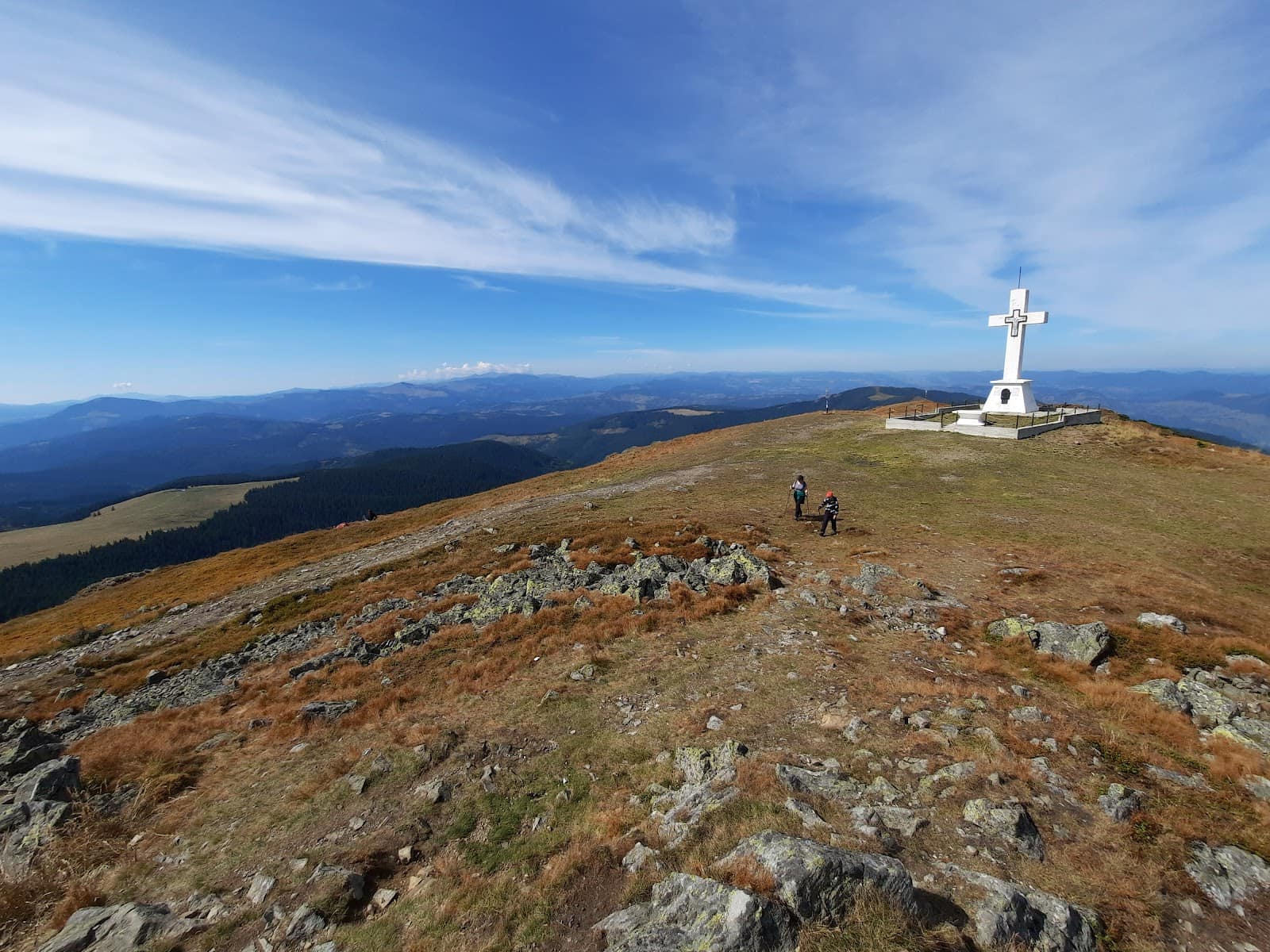
Rarău and Giumalău are neighbours, but different. Rarău (around 1,651 m, approximate) is rockier and more visually dramatic, with limestone crags jutting out of the spruce forest. Giumalău, at 1,857 m, is higher and more rounded, a dome covered with dwarf pine and meadows, offering a wide view toward the Călimani and Suhard ranges.
The two can be walked separately or linked by a long traverse along the saddle between them. For a first visit, Rarău offers more spectacle for less effort, thanks to the road that climbs nearly to the chalet.
Pietrele Doamnei: the emblem of the massif
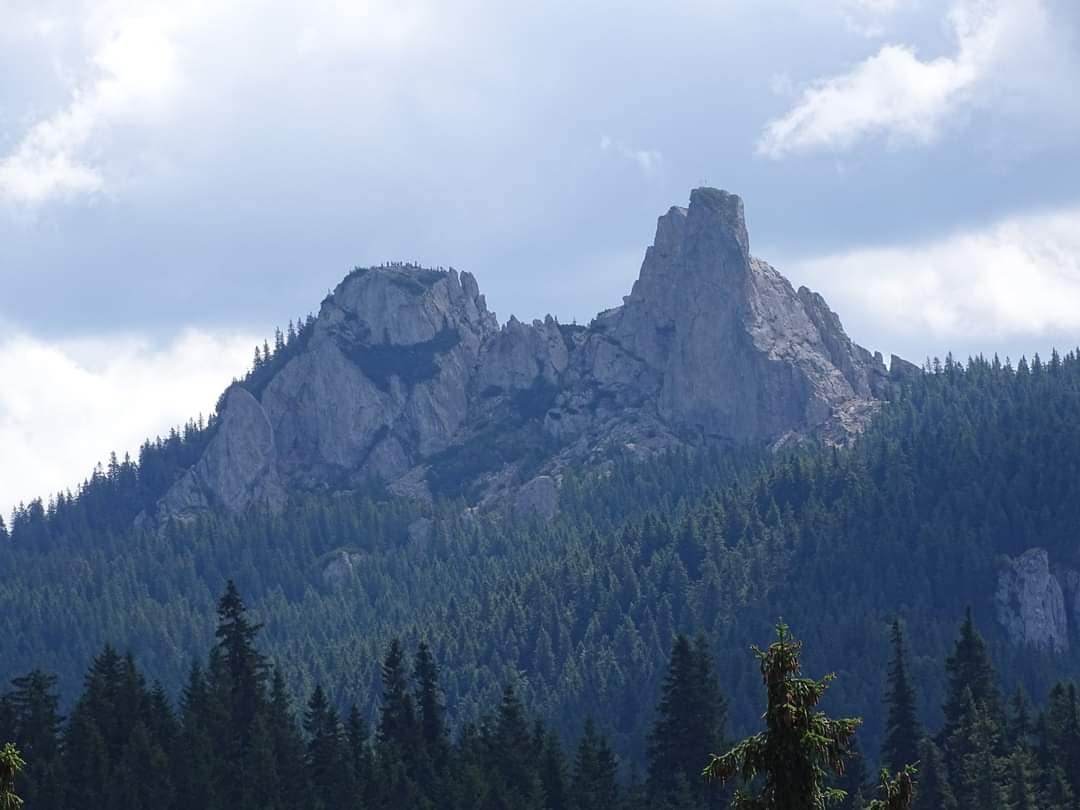
Pietrele Doamnei (the Lady's Stones) is the group of limestone rocks that defines Rarău's silhouette. The white towers, tens of metres high, rise abruptly from the forest and are visible from afar. The name is tied to a legend of a lady who supposedly hid here, but beyond the story, the formation is a real geological landmark and a recognised climbing site.
From the Rarău chalet, the trail to the base of Pietrele Doamnei is short and accessible, and the viewpoint at the top opens a wide panorama over forests and surrounding ridges. It is one of the most photographed views in Bukovina.
Transrarău: the scenic road into the massif
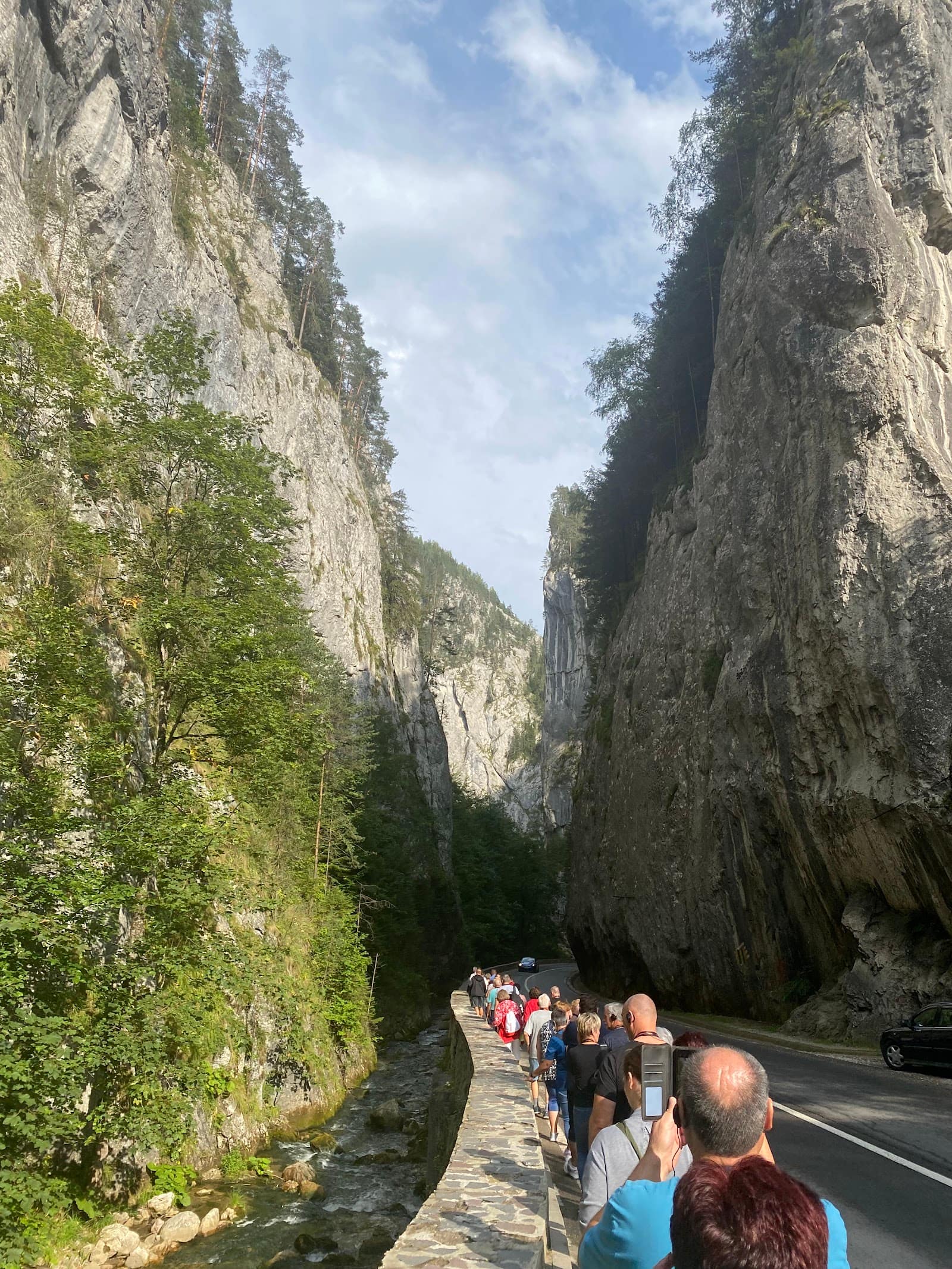
Transrarău is the road linking the Bistrița valley with the area of the Rarău chalet, winding through forest almost to the ridge. It is a classic scenic drive, ideal for those who want to get high up without a long hike, and an experience in itself for fans of mountain roads.
The road has narrow sections and gets crowded on summer weekends, while in winter it may be closed or difficult due to snow. It belongs on any list of scenic roads in Romania. If the theme interests you, read our guide to scenic roads of Romania.
Vatra Dornei: the base resort
Vatra Dornei is the resort town that works perfectly as a base for exploring the area. It has a spa tradition, mineral springs, a central park, and a ski slope right above town. From here you can easily reach both Rarău and Giumalău, as well as the Golden Bistrița valley and the surrounding mountain villages.
For your stay, look for accommodation in Vatra Dornei or the nearby villages; the range of traditional guesthouses is generous and often comes with good local cooking.
The surrounding monasteries: UNESCO heritage within reach
What makes Bukovina unique is the closeness of mountains and painted monasteries. North of the massif lie some of the most valuable religious complexes in Europe, with exterior frescoes preserved for centuries. Voroneț, with its famous blue, is the best known, but Moldovița, Sucevița, and Humor are just as worth a visit.
Many of them are part of the UNESCO heritage list. You can string them into a day circuit, either before or after the mountain part of your trip, depending on the weather.
How to split a 3-4 day trip
- Day 1: arrival in Vatra Dornei, stroll around the resort, perhaps skiing or the park.
- Day 2: drive up Transrarău, the Rarău chalet, Pietrele Doamnei.
- Day 3: a hike on Giumalău for the fit, or the monastery circuit for everyone else.
- Day 4: the remaining monasteries and the journey back.
Always check the weather before hiking days, because conditions change quickly at altitude, especially in spring and autumn.
Frequently asked questions
How hard is the route on Rarău?
From the Rarău chalet to Pietrele Doamnei it is a short hike accessible to most people. The traverse to Giumalău, however, is a long mountain tour that requires fitness.
Can you drive up Transrarău in any car?
The road is paved in sections, but narrow and winding. In summer it is passable in any car with care; in winter, check road conditions as it may be closed.
What is the difference between Rarău and Giumalău?
Rarău is rockier and more accessible, with Pietrele Doamnei as its draw. Giumalău, at 1,857 m, is higher, more rounded, and requires a longer tour.
Can I visit the monasteries and the mountain on the same trip?
Yes, that is Bukovina's very advantage: the painted monasteries are less than an hour from the massif, so you can alternate mountain days with cultural days.
When is the best time for Bukovina?
Summer and early autumn for hiking, and autumn for the forest scenery. Winter works for skiing at Vatra Dornei and for the seasonal atmosphere.